

Mindful Living Habits for Women: A Practical Guide
Last Updated: November 12, 2026
Quick Summary
Mindful living means paying deliberate attention to the present moment without judgment, and it fits real women's lives because it asks for seconds, not hours. Build the habit by anchoring short practices to things you already do, like three box breaths at your first sip of coffee or a five-senses check between meetings. Consistency beats duration every time.
- The one-minute exercise is four-count box breathing repeated for three cycles, with no app or cushion needed.
- A simple mindfulness meditation is five minutes of seated breath attention, and returning a wandering mind is the practice.
- Build up over four weeks: two minutes daily in week one, reaching five minutes daily plus one ten-minute session by week four.
- Match the practice to your schedule, such as a two-minute five-senses check between back-to-back meetings.
- If breath focus triggers panic or dissociation, stop and switch to an external anchor like sounds or your feet on the floor.
Table of Contents
- Why Mindful Living Habits Fit Real Women's Lives
- Quick Mindfulness Exercises You Can Do Anywhere
- A Simple Mindfulness Meditation to Start With
- Building a Mindful Daily Routine That Sticks
- Mindful Living Habits for Women at Every Life Stage
- Common Obstacles and How to Troubleshoot Them
- Choosing a First Mindful Living Tool from Elamae
- Frequently Asked Questions
Why Mindful Living Habits Fit Real Women's Lives
Mindful living is the practice of paying deliberate attention to the present moment without judgment, and it fits real life because it asks for seconds, not hours.
The interest is measurable.
That is the tension worth naming up front: the women who most need a pause are usually the ones with the least room for a 45-minute ritual.
Quick Mindfulness Exercises You Can Do Anywhere
Quick mindfulness exercises are short practices, usually under two minutes, that anchor attention in the body or senses so you can reset between tasks. They work because they interrupt the stress response without requiring a quiet room or a cleared schedule.
The One-Minute Mindfulness Exercise for Busy Days
The one-minute mindfulness exercise is simple: inhale for four counts, hold for four, exhale for four, hold for four, then repeat the cycle three times. That is it. No app, no cushion, no candle.
Box breathing works because the counting gives a distracted mind something to hold. If you want a physical cue, a box breathing necklace gives your finger a path to trace through the four steps.
Sensory Awareness: Five Senses, Five Breaths
Sensory awareness means deliberately naming what you can see, hear, feel, smell, and taste, one sense per breath. Try it in the car before you walk into the building:
- One breath: name three things you can see
- One breath: name two things you can hear
- One breath: notice what your hands are touching
It sounds almost too small to matter, but it requires nothing and nobody notices you doing it.
A Simple Mindfulness Meditation to Start With
A simple mindfulness meditation is five minutes of seated attention on the breath, with no expectation of emptying your mind. Sit upright, set a timer, and follow the breath; when your attention wanders, return it. The returning is the practice, not the failure.
Research from the University of Bath found that brief daily mindfulness practice was associated with improved well-being and reduced depression and anxiety. Brief is the operative word.
Three Meditation Formats to Choose From
Pick the format that matches how your mind behaves today, not the one that sounds most impressive.
- Breath-anchored (5 minutes). Sit upright, feet flat, hands in your lap. Follow the inhale and exhale at the nostrils or the belly. When you notice you have drifted, name it quietly ("thinking") and return. This is the default and the easiest to repeat.
- Body scan (5-10 minutes). Lie down or sit back. Move attention slowly from the soles of your feet to the crown of your head, pausing at each region for one or two breaths. This suits people who find breath focus too abstract.
- Open-awareness (5 minutes). Sit with eyes softly open, resting on a point a few feet ahead. Let sounds, sensations, and thoughts arrive and pass without selecting any one as the object. This suits readers who get sleepy during breath practice.
A Four-Week Progression That Actually Builds
Many people stop when they start at a length they admire rather than one they can sustain. Build in this order:
- Week 1: two minutes, once a day, same time and same seat.
- Week 2: three minutes, once a day; add a second two-minute session on two days.
- Week 3: five minutes, once a day; keep the optional second session.
If a week feels shaky, repeat it. There is no schedule to fall behind on.
Posture, Props, and Small Setup Details
You do not need a cushion, but you do need a setup your body will tolerate for five minutes. Sit with hips slightly higher than knees (a firm pillow works), feet grounded, spine upright but not rigid, shoulders dropped. If sitting cross-legged is painful, sit in a chair with both feet flat, this is not a lesser practice. If lying down makes you drowsy, prop your head and keep one knee bent.
A timer matters more than people expect: it removes the low-grade checking ("how long has it been?") that quietly pulls attention out of the practice. A phone on silent, face down, is fine; a phone face up is not.
What to Do When It Goes Wrong
- You keep planning. Normal. Label it "planning" and return to the next breath.
- You get sleepy. Open your eyes, sit up straighter, or switch to open-awareness for the day.
- You feel restless. Shorten to two minutes and use a body scan instead of breath focus.
Watch out: if breath focus triggers panic, dissociation, or intrusive memories, stop and switch to an external anchor, sounds, the feeling of your feet on the floor, or a physical object in your hand.
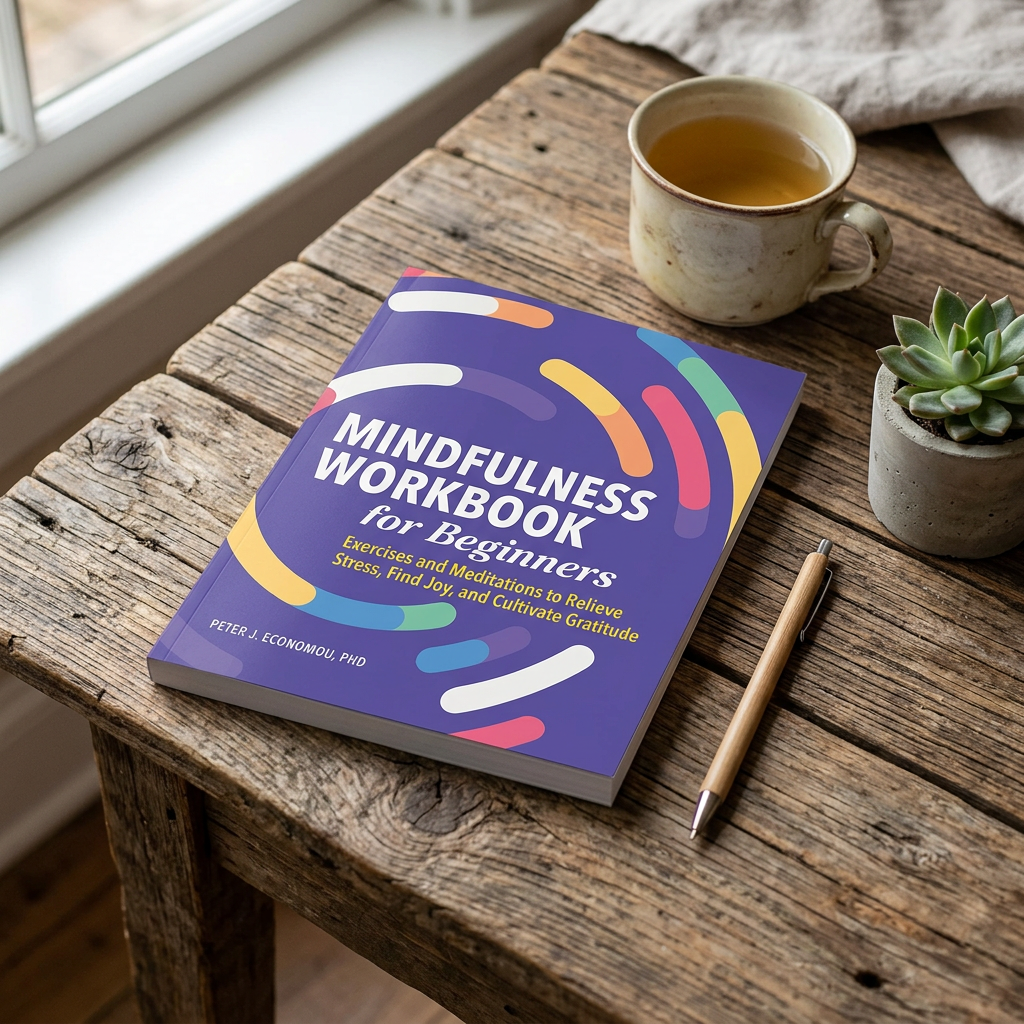
If you would rather have structure than a timer, the Mindfulness Workbook for Beginners by Peter Economou walks through step-by-step meditations, breathing exercises, body scans, and writing prompts, so you can follow a page instead of building a practice from scratch.
Building a Mindful Daily Routine That Sticks
A mindful daily routine sticks when it attaches to something you already do, rather than to a new block of time you have to defend.

Habit Stacking and a Time-Based Plan for Different Schedules
Match the practice to the time you actually have, not the time you wish you had.
| If your day looks like | Anchor the habit to | Practice | Time |
|---|---|---|---|
| Early start, no alone time | First sip of coffee | Three box breaths | 1 min |
| Desk job, back-to-back calls | Between meetings | Five-senses check | 2 min |
| Caregiving, constant interruptions | Handwashing at the sink | Breath awareness | 1 min |
| Evening wind-down | Kettle or bath running | Body scan in bed | 5 min |
Time
Consistency beats duration every time. Three breaths daily for a month builds more than one 30-minute session you never repeat.
Mindful Living Habits for Women at Every Life Stage
Mindful living habits for women change with circumstances, and the practice should change with them. A college student, a new parent, and a woman in perimenopause are working with different nervous systems, schedules, and sleep. Here is how to adapt.
Menstruation: Working With the Cycle, Not Against It
Practical adaptations:
- Higher-energy days: longer sits (10 minutes) or open-awareness practice.
- Lower-energy days: two-minute body scans lying down.
- Premenstrual irritability: sensory anchoring (naming what you see and hear) may feel easier than silent sitting.
New Parenthood: Micro-Practice Is the Only Practice
Long sessions will not survive interrupted sleep and unpredictable feeding schedules. Build around what already happens:
- Feeding or pumping: one minute of breath awareness at the start, not the whole session.
- Handwashing: a five-senses check at the sink.
- The stroller walk: one block of walking with attention on sound only.
Perimenopause and Menopause: Evening and Sleep-Adjacent Practice
Sleep disruption and hot flashes can change what works. Evening rituals may suit some readers better than morning ones:
-
Wind-down body scan in bed, five minutes, lights low.
-
A consistent pre-sleep anchor, the same tea, the same chair, to cue the nervous system.
Caregiving and Other Transitions
Caregiving, a job change, a move, or a hard season all compress available time and raise baseline stress. The adaptation is the same: shrink the practice to something that survives the worst day, and anchor it to a task you cannot skip, handwashing, the kettle, the car before you walk in.
Trauma-Sensitive and Accessible Adaptations
Not every reader can close their eyes, sit still, or focus on the breath without distress. Alternatives that work:
- Eyes open, soft gaze instead of closed eyes.
- External anchors, sounds, the feel of a pendant, the soles of the feet, instead of breath.
- Movement-based practice, walking, stretching, or a slow sequence, instead of seated stillness.
What the Evidence Supports, and What It Doesn't
The evidence base is uneven by stage. A randomized controlled trial indexed by Harvard's T.H. Chan School of Public Health examined a mindfulness intervention's effects on mindful eating in adults with obesity, with a sample that was 78% women, but the published summary does not state the outcome.
Mindfulness is not a substitute for professional care. If you are navigating a mental health condition, persistent sleep problems, or significant hormonal symptoms, a licensed clinician is the right resource; practice can sit alongside treatment, not replace it.
A Nervous System Reset Kit with tea, bath salts, sleep balm, and lavender gives that evening ritual a physical shape.
Common Obstacles and How to Troubleshoot Them
A common obstacle is the belief that you are not "the mindful type." Lowering the entry point and removing the performance element can help.
A few fixes that work:
- "I can't stop thinking." You are not supposed to. Notice the thought, return to the breath.
- "I missed three days." Restart today. There is no streak to protect.
- "It feels silly." Use a sensory anchor instead of silence; tracing a pendant or naming colors feels less exposed than sitting with eyes closed.
If you feel you are not artistic enough for creative practices, how to practice mindfulness without being artistic covers alternatives that skip the craft table entirely.
Watch out: if breath focus makes you feel panicky or brings up distressing memories, stop and try sensory anchoring instead.
Choosing a First Mindful Living Tool from Elamae
A useful first tool is one that removes a decision rather than adding one.
- No time: the Box Breathing Necklace, $62.00, gives you a wearable one-minute practice.
- No structure: the Mindfulness Workbook for Beginners, $17.99, provides guided meditations and prompts.
- No wind-down: the Nervous System Reset Kit, $50.00, brings together tea, bath salts, sleep balm, and lavender in one box.
- Wants something to tend: the Get Growing Garden in a Bag Kit with Mindfulness Journal, $35.00, pairs a growing project with a pocket journal.
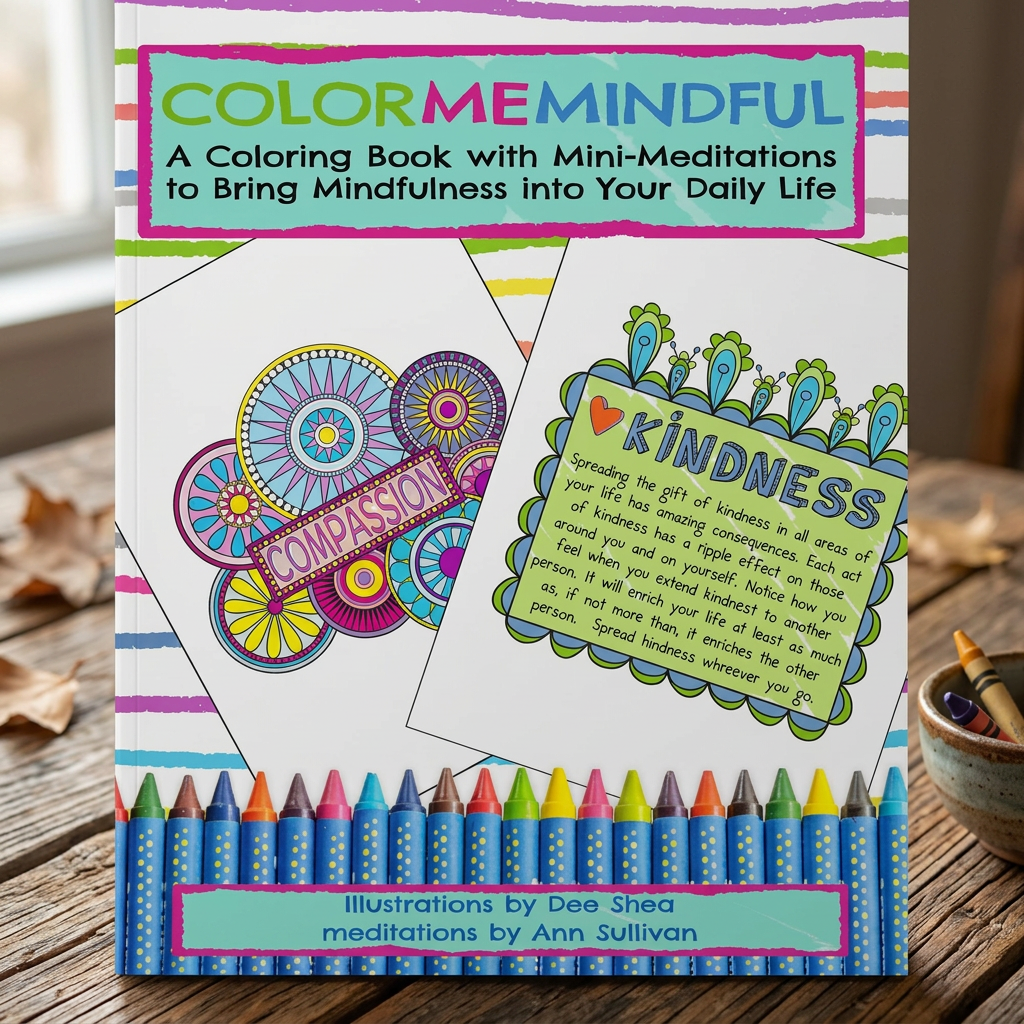
- Wants a creative entry point: Color Me Mindful, $12.48, pairs coloring pages with mini-meditations.
If you want routines with more texture than a timer, how to find joy in daily routines goes further into the everyday practices behind them.

The hard part is not learning what to do. It is starting small enough that you will still be doing it in three weeks.
Frequently Asked Questions
What are some quick mindfulness exercises I can fit into a busy day?
The most practical quick mindfulness exercises take under two minutes. Try a one-minute breathing pause before you open your email, a five-senses check while waiting for coffee to brew, or tracing a four-part breath on a pendant between tasks. The point is frequency, not duration: three one-minute pauses spread across a day build more self-awareness than one long session you skip.
How do I start a simple mindfulness meditation if I've never meditated before?
Sit comfortably, set a timer for three to five minutes, and follow your breath. When attention wanders, return it without judgment. That return is the practice, not a failure. A structured resource helps: the Mindfulness Workbook for Beginners by Peter Economou ($17.99) includes step-by-step meditations, breathing exercises, body scans, and writing prompts. A short daily session is a reasonable starting point.
What are the 5 R's of mindfulness?
A common framework is recognize, release, relax, re-center, and respond. You recognize a thought or feeling, release the urge to fix it immediately, relax your body, re-center on your breath or senses, and then respond deliberately rather than react. It pairs well with a mindful daily routine because each step takes seconds. Use it during transitions, like before a meeting or after a difficult conversation, to create a small gap between stimulus and response.
How can I practice mindful living when my schedule is chaotic?
Attach practices to things you already do. Breathe once before you unlock your phone, notice three sounds while the kettle heats, or take a slow breath before you answer a message. The Get Growing Garden in a Bag Kit with Mindfulness Journal ($35.00) pairs a small growing project with a pocket journal and a Rooted Meditation card, giving you one tangible anchor.
How do I measure progress without turning mindfulness into another performance task?
Skip streaks and scores. Instead, notice qualitative shifts: Do you pause before reacting more often? Do everyday tasks feel less rushed? A pocket journal helps you record a single sentence a few times a week, not daily. The point is self-understanding, not compliance. If tracking starts to feel like another chore, drop the tracking and keep the practice. Progress in mindful living shows up as calmer responses and better sleep, not as a completed checklist.
Is mindfulness safe for everyone, including people with trauma histories?
Most breathing and sensory practices are gentle, but closed-eye meditation and body scans can feel uncomfortable for some people with trauma histories. Trauma-sensitive approaches keep eyes open, focus on external senses like sound or touch, and let you stop at any time. If practice brings up distress you cannot settle, pause and speak with a licensed mental health professional. Treat mindfulness as one supportive tool rather than a treatment.
